Teaching English as a Second Language: The Complete Guide for Modern Educators
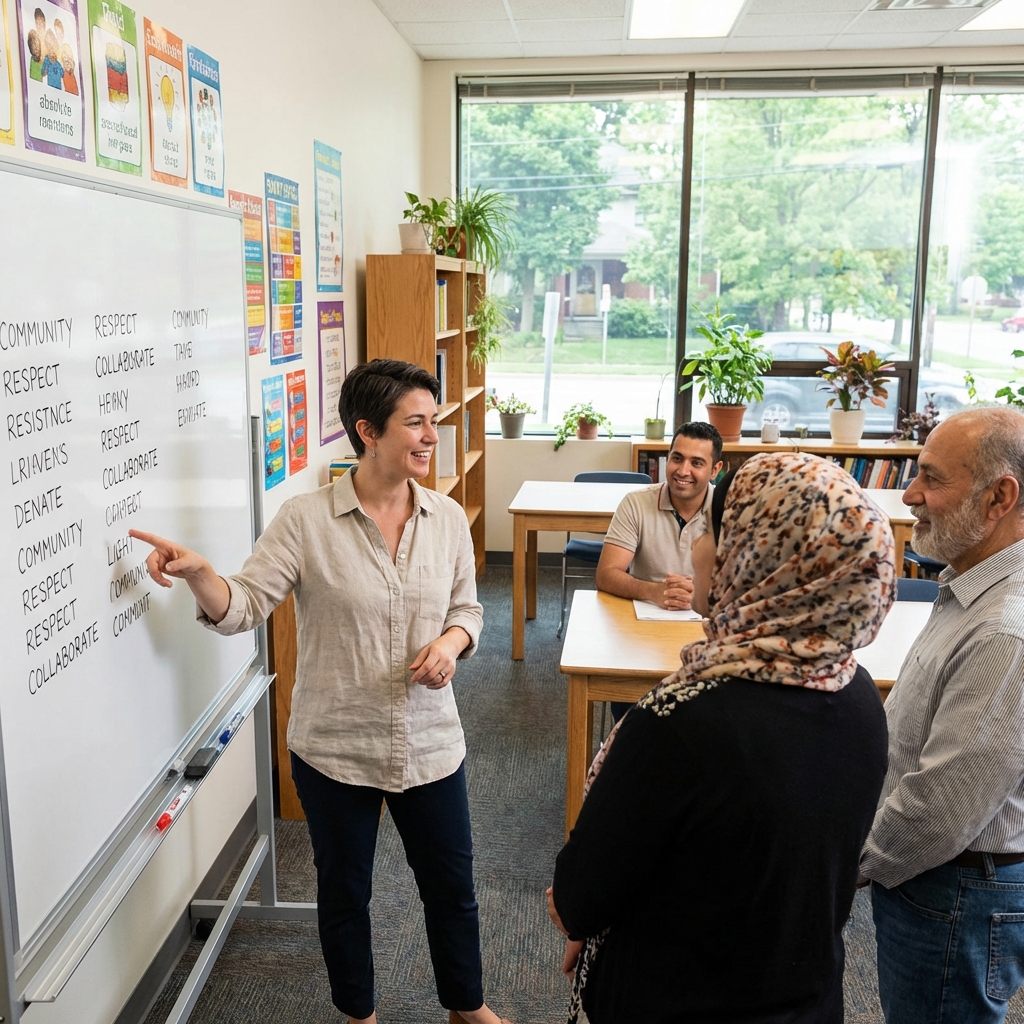
Teaching English as a Second Language (TESL) is one of the most rewarding and in-demand professions in education. With over 1.5 billion people learning English worldwide, the need for qualified, effective ESL teachers has never been greater. Whether you're considering a career change, just starting out, or looking to level up your teaching practice, this guide will give you everything you need to succeed.
This isn't a quick tips article—it's a comprehensive deep dive into the art and science of teaching English to non-native speakers. By the end, you'll understand the methodologies, have practical classroom strategies, and know how to build a sustainable teaching career.
What is TESL? Understanding the Terminology
Before we go further, let's clear up the alphabet soup of teaching English acronyms:
- TESL (Teaching English as a Second Language): Teaching English to people living in an English-speaking country (e.g., immigrants learning English in the US).
- TEFL (Teaching English as a Foreign Language): Teaching English to people in non-English-speaking countries (e.g., teaching in Japan or Brazil).
- TESOL (Teaching English to Speakers of Other Languages): An umbrella term that covers both TESL and TEFL.
- ESL (English as a Second Language): Often used interchangeably with TESL; refers to the subject or learner context.
- EFL (English as a Foreign Language): Refers to English taught in countries where it's not the primary language.
- EAL (English as an Additional Language): Common in the UK; acknowledges that English may be a third or fourth language.
In practice, most people use these terms loosely. What matters more is understanding your students' context: Are they learning English for survival (immigrants)? For exams (IELTS/TOEFL)? For career advancement (Business English)? For fun (hobbyists)? Your approach should adapt accordingly.
A Brief History of English Language Teaching
Understanding where we've come from helps explain why we teach the way we do today.
The Grammar-Translation Method (1800s-1940s)
This was the original approach, borrowed from teaching Latin and Greek. Students memorized vocabulary lists, learned grammar rules, and translated texts. Speaking was barely practiced. It produced students who could read Shakespeare but couldn't order a coffee. The method still lingers in some countries' school systems today.
The Audio-Lingual Method (1940s-1960s)
Developed during World War II to train soldiers in foreign languages quickly, this method focused on drilling patterns through repetition. 'I go to the store. You go to the store. He goes to the store.' It was better for speaking but treated language like a mechanical skill rather than a creative tool.
Communicative Language Teaching (1970s-Present)
CLT revolutionized TESL by focusing on what language is for: communication. Instead of drilling grammar in isolation, students practice using language in meaningful contexts. The goal shifted from accuracy to fluency—from knowing ABOUT English to actually USING it.
Task-Based Language Teaching (1980s-Present)
A development of CLT, TBLT structures lessons around completing real-world tasks: planning a trip, solving a problem, completing a project. Grammar and vocabulary are taught as needed to complete the task, not as standalone lessons.
The Post-Method Era (2000s-Present)
Today's best teachers don't follow any single method dogmatically. They draw on all approaches based on student needs, lesson objectives, and context. This principled eclecticism is the mark of a skilled TESL professional.
Essential Qualifications for TESL Teachers
What do you actually need to teach English? The answer depends on where and who you want to teach.
Entry-Level Certificates
- TEFL Certificate (120 hours): The minimum for most international teaching jobs. Can be completed online in 4-8 weeks. Opens doors for teaching abroad.
- CELTA (Certificate in Teaching English to Speakers of Other Languages): The Cambridge gold standard. 120+ hours including observed teaching practice. Highly respected worldwide.
- Trinity CertTESOL: Considered equivalent to CELTA. Also includes observed teaching practice.
Advanced Qualifications
- DELTA (Diploma in Teaching English to Speakers of Other Languages): For experienced teachers. Focuses on theory and specialization.
- MA TESOL: A full master's degree in the field. Required for university positions and teacher training roles.
- Specialized Certificates: IELTS Examiner certification, Young Learner certificates, Business English certifications.
Native Speaker Privilege—And Its Limits
Historically, being a 'native speaker' was considered essential for TESL jobs. This is changing, and for good reason. A Brazilian teacher who learned English themselves often understands learner struggles better than a monolingual American. Many of the world's best English teachers are non-native speakers. What matters is proficiency, teaching skill, and cultural competence—not your passport.
Understanding Your ESL Students
Effective teaching starts with understanding who you're teaching. ESL learners are incredibly diverse.
Age Groups
Young Learners (3-12): Short attention spans, learn through play and movement, need lots of praise, acquire pronunciation easily, may not understand abstract grammar explanations.
Teenagers (13-18): Self-conscious about making mistakes, motivated by peer approval, need activities that feel relevant to their lives, can handle more abstract concepts.
Adults (18+): Have clear goals and limited time, bring prior learning experiences (good and bad), can learn grammar explicitly, need to feel respected and not 'talked down to.'
Learning Contexts
- Immigrants/Refugees: Learning for survival. Need practical English for daily life, jobs, navigating bureaucracy.
- International Students: Studying in English-medium universities. Need academic English: essay writing, reading textbooks, presentations.
- Business Professionals: Need English for work: emails, meetings, negotiations, presentations.
- Exam Candidates: Preparing for IELTS, TOEFL, Cambridge exams. Need strategic test preparation.
- General Learners: Learning for travel, hobbies, personal development. Need engaging, flexible lessons.
L1 Influence
Your students' first language shapes how they learn English. Speakers of Germanic languages (German, Dutch) find English easier grammatically. Speakers of Chinese struggle with articles (a/the) because Chinese doesn't have them. Spanish speakers confuse 'ser' and 'estar' meanings in English 'to be.' Arabic speakers struggle with vowel sounds. Understanding L1 influence helps you predict and address common errors.
Core TESL Methodologies You Should Know
Communicative Language Teaching (CLT)
The dominant approach today. Key principles:
- Language is for communication, not just knowledge.
- Real communication is the goal of every activity.
- Fluency is as important as accuracy.
- Students do most of the talking (student talking time > teacher talking time).
- Errors are natural and part of learning.
Task-Based Language Teaching (TBLT)
Structure lessons around meaningful tasks:
- Pre-task: Introduce the topic and task.
- Task cycle: Students complete the task while teacher monitors.
- Language focus: Analyze language that emerged from the task.
Example: Students plan a weekend trip together (task). Afterward, teach the grammar structures they struggled with.
The PPP Model
A classic lesson structure:
- Presentation: Introduce new language (teacher-led).
- Practice: Controlled exercises (drills, gap-fills).
- Production: Free use of language (role-plays, discussions).
Test-Teach-Test
Alternative to PPP:
- Test: Students try to use the target language. You assess what they know.
- Teach: Teach what they don't know based on the test results.
- Test: Students use the language again. Did they improve?
The Lexical Approach
Focuses on teaching 'chunks' of language rather than individual words or grammar rules. Instead of teaching 'I + have + to + verb,' teach the phrase 'I have to go' as a unit. Students learn collocations, fixed expressions, and sentence frames.
Planning Effective ESL Lessons
A well-planned lesson makes all the difference. Here's a framework that works:
Step 1: Define Clear Objectives
What will students be able to DO by the end of the lesson? Be specific.
Weak: 'Students will learn about the past tense.'
Strong: 'Students will be able to describe what they did last weekend using regular and irregular past tense verbs.'
Step 2: Warm-Up (5-10 minutes)
Get brains engaged and activate relevant prior knowledge:
- Review last lesson's content.
- Discussion question related to today's topic.
- Quick game or vocabulary review.
Step 3: Presentation/Introduction (10-15 minutes)
Introduce new material through:
- A short text or dialogue.
- A video or audio clip.
- Teacher explanation with examples.
Keep teacher talk time short. Let students discover patterns when possible.
Step 4: Controlled Practice (10-15 minutes)
Students practice with support:
- Gap-fill exercises.
- Matching activities.
- Substitution drills.
- Sentence transformation.
Focus: accuracy.
Step 5: Free Practice (15-20 minutes)
Students use language independently:
- Role-plays and simulations.
- Discussion questions.
- Information gaps.
- Writing tasks.
Focus: fluency. This is where real learning happens.
Step 6: Wrap-Up (5 minutes)
- Summarize key points.
- Check understanding.
- Assign homework.
- Preview next lesson.
Teaching the Four Skills
Teaching Listening
Listening is often neglected but crucial. Key strategies:
- Pre-listening: Activate topic knowledge, pre-teach vocabulary, set a purpose for listening.
- While listening: Give specific tasks (answer questions, fill gaps, follow a route on a map).
- Post-listening: Discuss content, analyze language, extend with speaking/writing.
Use variety: songs, podcasts, TED talks, news clips, textbook audio, teacher talk.
Teaching Speaking
The most important skill for communication. Tips:
- Minimize teacher talking time (aim for 30% teacher, 70% students).
- Use pair work and group work extensively.
- Create real information gaps—students genuinely don't know what partner will say.
- Delay error correction during fluency activities.
- Model natural speech with contractions, weak forms, and connected speech.
Teaching Reading
Reading builds vocabulary and grammar passively. Key sub-skills:
- Skimming: Reading quickly for general meaning.
- Scanning: Reading quickly to find specific information.
- Intensive reading: Reading carefully for detailed understanding.
- Extensive reading: Reading lots of easy material for pleasure.
Always have pre-reading, while-reading, and post-reading stages.
Teaching Writing
Writing is often students' weakest skill because it makes all errors visible. Approach it in stages:
- Sentence level: Correct word order, basic punctuation, subject-verb agreement.
- Paragraph level: Topic sentences, supporting details, coherence.
- Essay level: Introduction, body paragraphs, conclusion, thesis development.
Use the process approach: brainstorm → outline → first draft → peer feedback → revision → editing → final draft.
Teaching Grammar Effectively
Grammar still matters, but how you teach it has changed. Best practices:
Meaning Before Form
Start with what the grammar MEANS and when we use it, not just how to form it. 'We use the present perfect when the past connects to now' is more useful than 'have/has + past participle.'
Inductive vs. Deductive
- Deductive: Teacher explains rule → students practice. Fast but passive.
- Inductive: Students see examples → figure out rule. Slower but deeper learning.
Use inductive for motivated learners; deductive when time is short.
Context is Everything
Never teach grammar in isolation. A sentence like 'If I had known, I would have come' means nothing without a story around it. Use dialogues, narratives, and real situations.
Practice with Purpose
Drills have their place, but move quickly to meaningful practice. Students need to use grammar for real communication, not just fill blanks.
Teaching Vocabulary Effectively
Vocabulary is the heart of language. Without words, grammar is useless.
How Many Words Do Students Need?
- 2,000 words: Basic conversation
- 5,000 words: Intermediate fluency
- 10,000+ words: Near-native comprehension
What Does 'Knowing a Word' Mean?
It's more than definition. Students need to know:
- Form (spelling, pronunciation)
- Meaning (denotation, connotation)
- Use (collocations, register, grammar patterns)
Teaching Techniques
- Visual: Pictures, realia, mime
- Context: Use in a sentence
- Definition: Simple explanation
- Translation: Quick and useful (use sparingly)
- Antonyms/Synonyms: Connect to known words
Recycling is Essential
Students forget 80% of new words within a week. You must revisit vocabulary multiple times across lessons. Use spaced repetition, vocabulary games, and regular review.
Classroom Management for ESL
Managing a diverse ESL classroom presents unique challenges.
Creating a Safe Environment
Students need to feel safe making mistakes. Ways to build psychological safety:
- Never mock errors.
- Praise effort, not just correctness.
- Normalize mistakes: 'Everyone makes this mistake at first.'
- Use pair work before whole-class sharing.
Setting Clear Expectations
- Teach classroom language early: 'How do you spell that?' 'Can you repeat please?'
- Establish routines that don't require complex instructions.
- Use visual instructions whenever possible.
Managing Mixed-Level Classes
ESL classes often have huge level differences. Strategies:
- Differentiated tasks: Same topic, different difficulty.
- Flexible grouping: Sometimes pair strong with weak, sometimes similar levels together.
- Open-ended activities: Tasks where output varies by ability.
- Fast finisher tasks: Extension activities for quick students.
Error Correction: When and How
Correcting every error kills fluency. Not correcting at all lets fossilization happen. Balance is key.
Fluency vs. Accuracy Activities
- Accuracy focus: Correct immediately. Students expect it.
- Fluency focus: Note errors down. Correct later (delayed correction).
Correction Techniques
- Recasting: Repeat what student said, correctly. 'I goed there.' → 'Oh, you went there? Tell me more.'
- Elicitation: Prompt self-correction. 'I goed...' → 'Hmm, goed? What's the past of go?'
- Finger counting: Gesture to show where error is.
- Delayed correction: Write errors on board at end of activity. Students identify and correct.
Using Technology in TESL
Technology has transformed what's possible in the ESL classroom.
Essential Tools
- Learning Management Systems: Google Classroom, Canvas, Moodle
- Video Platforms: Zoom, Google Meet, Microsoft Teams
- Interactive Whiteboards: Miro, Jamboard
- Quiz Tools: Kahoot, Quizizz, Blooket
- Flashcard Apps: Anki, Quizlet
- AI Tools: GoTeach for worksheet generation, ChatGPT for ideas
Using AI Responsibly
AI can generate lesson materials, conversation prompts, and assessment items in seconds. But always review AI output for accuracy and appropriateness. AI is a tool, not a replacement for teacher judgment.
Assessment in TESL
Formative Assessment
Ongoing, informal assessment that informs teaching:
- Observation during activities
- Exit tickets
- Mini-quizzes
- Student self-assessment
Summative Assessment
End-of-unit or end-of-course evaluation:
- Written tests
- Speaking exams
- Portfolio assessment
- Standardized tests (IELTS, TOEFL)
Self and Peer Assessment
Teaching students to evaluate themselves and each other builds metacognition and reduces grading burden. Provide clear rubrics and model the process.
Building a TESL Career
Getting Started
- Get certified (CELTA or 120-hour TEFL minimum).
- Volunteer or tutor to build experience.
- Teach abroad for rapid learning (if circumstances allow).
- Build a portfolio of lesson plans and materials.
Career Pathways
- Classroom Teacher: Schools, language academies, community colleges
- Private Tutor: 1-to-1 or small groups, online or in-person
- Corporate Trainer: Teaching Business English to companies
- Test Prep Specialist: IELTS, TOEFL, Cambridge exam preparation
- Materials Developer: Creating textbooks, online courses, curricula
- Teacher Trainer: Training new TESL teachers
- Academic Leadership: Director of studies, curriculum coordinator
Continuous Professional Development
The best teachers never stop learning:
- Attend conferences (TESOL International, IATEFL).
- Join professional communities (Facebook groups, LinkedIn, Slack).
- Read journals (ELT Journal, TESOL Quarterly).
- Pursue advanced qualifications (DELTA, MA TESOL).
- Observe other teachers and get observed.
Common Challenges and Solutions
Students Won't Speak
Cause: Fear of making mistakes.
Solution: Pair work before whole-class sharing. Praise effort. Create low-stakes speaking activities. Don't over-correct during fluency practice.
Students Only Want Grammar
Cause: Previous educational experiences, exam pressure.
Solution: Show them how grammar connects to communication. Use the 'grammar for communication' approach—teach grammar when it serves a communicative purpose.
Mixed Levels
Cause: Open enrollment, varied backgrounds.
Solution: Differentiated materials, flexible grouping, open-ended tasks where output varies by ability.
Cultural Differences
Cause: Students from diverse backgrounds have different expectations.
Solution: Be explicit about expectations. Learn about your students' cultures. Address conflicts directly but sensitively.
How GoTeach Can Help
Preparing materials for every lesson takes hours. GoTeach can generate worksheets, flashcards, lesson plans, and assessments in seconds—customized to your topic, level, and objectives. Spend less time on materials, more time on teaching.
Whether you're creating a vocabulary worksheet for a beginner class or a discussion guide for advanced IELTS candidates, GoTeach's AI tools adapt to your needs.
Final Thoughts
Teaching English as a Second Language is more than a job—it's a way to connect people, open doors, and change lives. The English language gives learners access to education, employment, travel, and relationships they couldn't have otherwise. As a TESL teacher, you're not just teaching a skill—you're giving people power.
The best TESL teachers combine strong methodology with genuine care for their students. They never stop learning, adapting, and improving. If you've read this far, you have what it takes. Now go teach.
More Teaching Resources
Browse AllStop struggling with shy students. Learn how to build confidence and get quiet kids talking in your English class without the stress.
Managing a huge class is tough. Use these simple steps to keep 30+ students busy, quiet, and learning English together.
Teaching English to 5 year olds? Forget the books! Use these fun movement games and songs to keep them learning.
Tired of coming up with ideas like this?
Save 10 hours a week with AI-powered lesson planning. Generate personalized activities, worksheets, and lesson plans in seconds.