How to teach Past Tense without being boring: Stop the drills!
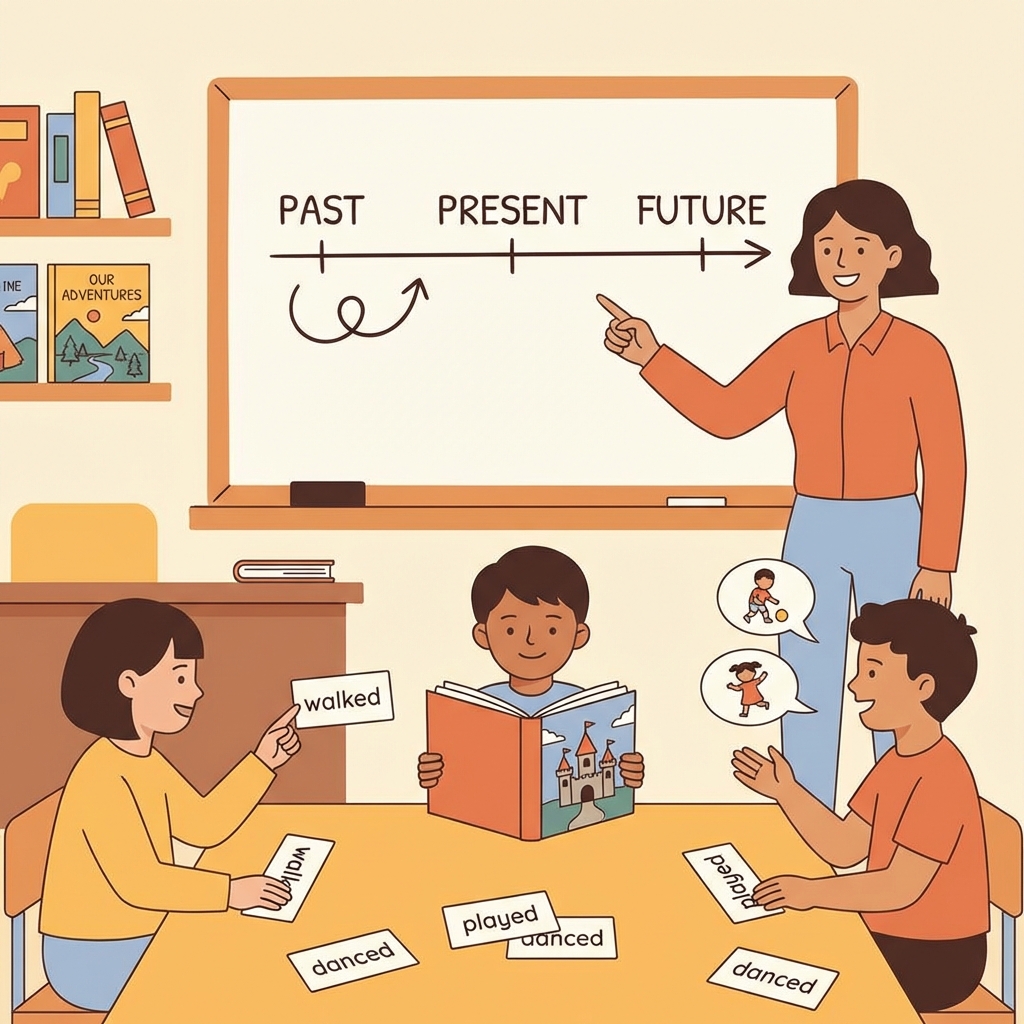
The Problem: The 'Ed' Boredom
Past tense usually means one thing: a giant list of irregular verbs on the whiteboard. 'Go' becomes 'Went.' 'Eat' becomes 'Ate.' It’s boring to teach and even more boring to learn. When students just memorize lists, they never use them when they actually speak.
The Solution: Storytelling and Secrets
You need to move the past tense from the board into their lives. Here is how to make it stick.
The 'Liar' Game
Tell the students about a crazy weekend you had. Tell them 5 things you did, but make one of them totally fake (like 'I flew to Mars'). Have them guess which one is the lie. Then, have them do the same. They will be so busy trying to trick their friends that they’ll forget they are practicing grammar.
The Alibi Game
Tell the class a 'crime' happened during lunch. Pick two students to be the suspects. They go outside and create an 'alibi'—they need to agree on exactly what they did, where they were, and what they ate. The rest of the class are detectives. They interview the suspects one by one. If their stories don't match exactly, they are guilty! This uses the past tense over and over again in a high-pressure, fun way.
Photo Journals
Have students bring in a photo from their childhood or a recent vacation. Instead of a boring essay, have them present the photo and say what happened. People love talking about themselves, and the past tense is the only way to do it.
More Teaching Resources
Browse AllStop struggling with shy students. Learn how to build confidence and get quiet kids talking in your English class without the stress.
Managing a huge class is tough. Use these simple steps to keep 30+ students busy, quiet, and learning English together.
Teaching English to 5 year olds? Forget the books! Use these fun movement games and songs to keep them learning.
Tired of coming up with ideas like this?
Save 10 hours a week with AI-powered lesson planning. Generate personalized activities, worksheets, and lesson plans in seconds.