How to Teach Kids to Read: The Complete Guide for Teachers and Parents
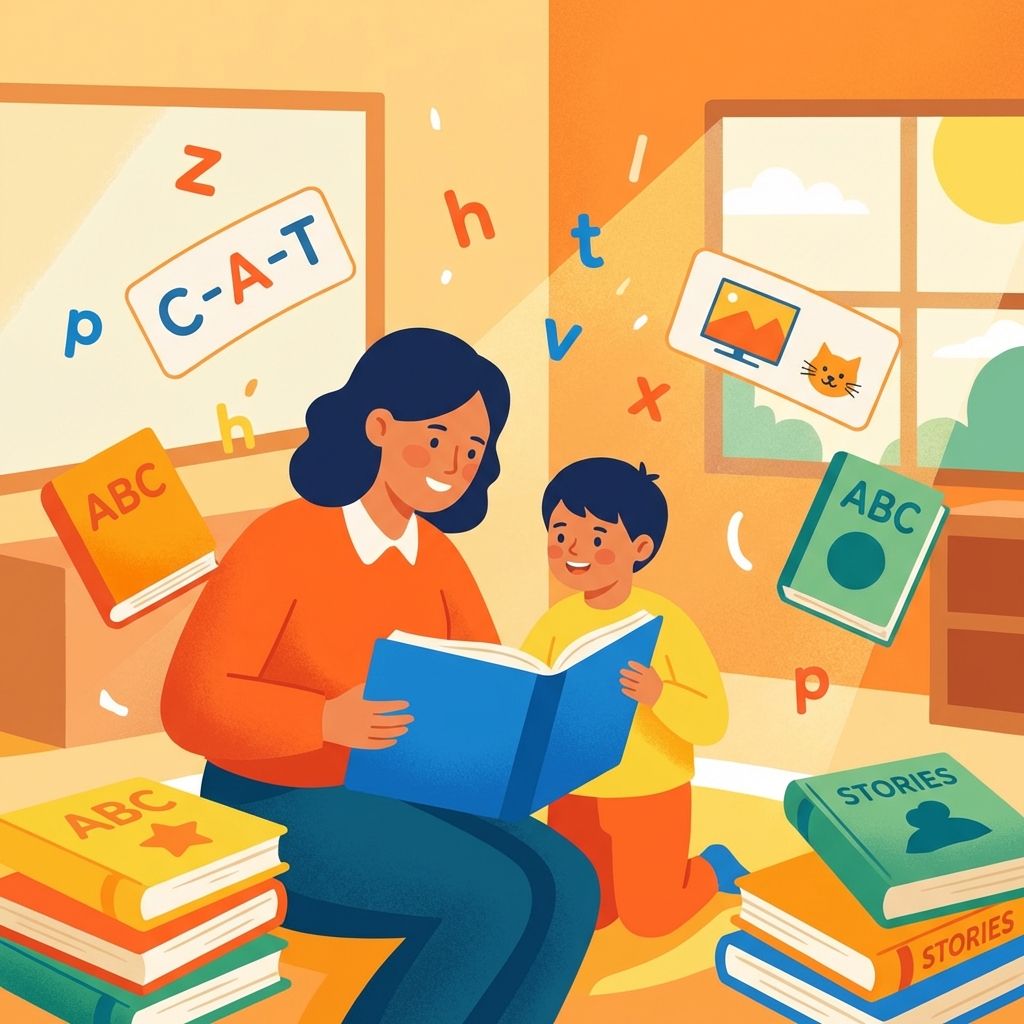
Teaching a child to read is one of the most important skills you can give them. It opens every door in education and life. But if you've ever stared at a struggling reader, you know it's not always easy. Some kids pick it up naturally, while others need a completely different approach.
This guide will walk you through everything you need to know about teaching reading—from the very first letter sounds to full comprehension. Whether you're a classroom teacher, a private tutor, or a parent helping at home, these strategies work.
Why Reading is the Foundation of Everything
Before we dive into the 'how,' let's talk about the 'why.' Reading isn't just about decoding words on a page. It's the gateway to every other subject. A child who can read well can teach themselves almost anything. A child who struggles with reading will struggle with math word problems, science textbooks, history lessons, and even following instructions in art class.
Research shows that children who are not reading at grade level by third grade are four times more likely to drop out of high school. That's a sobering statistic. But here's the good news: almost every child can learn to read with the right instruction and enough practice.
The Five Pillars of Reading Instruction
Effective reading instruction is built on five core components. Miss one, and you'll have gaps. Here's the breakdown:
1. Phonemic Awareness
This is the ability to hear and manipulate individual sounds in words. Before a child can connect letters to sounds, they need to hear that words are made of smaller pieces. For example, can they hear that 'cat' has three sounds: /k/, /a/, /t/?
Activities to Build Phonemic Awareness:
- Sound Counting: Say a word and have the child tap out how many sounds they hear. 'Dog' = 3 taps.
- First Sound Game: 'What sound does 'ball' start with?' Answer: /b/.
- Rhyme Time: 'Does 'cat' rhyme with 'hat'?' This helps them hear word patterns.
- Sound Blending: Say sounds slowly and have them guess the word. '/s/ /u/ /n/' = 'sun'.
2. Phonics
Phonics is the relationship between letters and sounds. Once a child can hear the sounds, you teach them which letters make those sounds. This is where the magic happens—suddenly, squiggles on a page become meaningful.
How to Teach Phonics Effectively:
- Start with single consonants and short vowels (a, e, i, o, u with their short sounds).
- Use CVC words (consonant-vowel-consonant) like 'cat,' 'dog,' 'pen.'
- Introduce blends (bl, cr, st) and digraphs (sh, ch, th) once they've mastered the basics.
- Practice daily with flashcards, magnetic letters, or digital apps.
Pro Tip: Don't teach letter names first. Teach sounds. Knowing the letter is called 'B' doesn't help them read 'bat.' Knowing it says /b/ does.
3. Fluency
Fluency is reading smoothly, with appropriate speed and expression. A child who reads word-by-word in a robotic voice isn't fluent yet. Fluency matters because it frees up brainpower for comprehension.
How to Build Fluency:
- Repeated Reading: Have them read the same short passage three times. Each time, it gets smoother.
- Echo Reading: You read a sentence, they repeat it immediately, copying your expression.
- Paired Reading: Read alongside the child, slightly faster. They naturally speed up to match you.
- Listen to Audiobooks: Let them follow along with a text while a narrator reads. They hear what fluent reading sounds like.
4. Vocabulary
A child can decode a word perfectly but still not understand it if they don't know what it means. Vocabulary grows through reading, but it also needs direct teaching.
Ways to Build Vocabulary:
- Pre-teach tricky words before reading a new book.
- Use new words in context and have the child guess the meaning.
- Create a 'Word Wall' with new words and their definitions.
- Play games like 'Guess the Word' or 'Synonym Match.'
5. Comprehension
The whole point of reading is understanding. Comprehension strategies need to be taught explicitly—kids don't just 'get it' automatically.
Key Comprehension Strategies:
- Predicting: 'What do you think will happen next?'
- Questioning: 'Why did the character do that?'
- Summarizing: 'What was this page about in one sentence?'
- Connecting: 'Has something like this ever happened to you?'
- Visualizing: 'Close your eyes. What does the scene look like in your head?'
The Best Methods for Teaching Reading
There are several proven approaches to reading instruction. The best teachers combine them based on the child's needs.
Systematic Phonics Instruction
This is the gold standard backed by decades of research. You teach letter-sound relationships in a specific order, from simple to complex. Programs like Orton-Gillingham, Wilson Reading, and Jolly Phonics use this approach.
The Balanced Literacy Approach
This combines phonics with whole-language methods (like exposing kids to lots of great books). Critics say it can neglect phonics, but done well, it creates well-rounded readers.
Structured Literacy
This is especially effective for struggling readers and those with dyslexia. It's explicit, sequential, and multisensory (using sight, sound, and touch together).
Common Mistakes to Avoid
Even well-meaning teachers and parents make mistakes. Here's what NOT to do:
- Skipping phonemic awareness: If a child can't hear the sounds, they can't map them to letters.
- Guessing from pictures: Teaching kids to guess words from pictures is a crutch that breaks later.
- Moving too fast: Master one skill before adding the next. Patience is key.
- Reading boring books: If the child hates the book, they'll hate reading. Find their interests.
- Over-correcting: If you stop them every second word, they'll stop trying.
What to Do When a Child Is Struggling
Not every child learns at the same pace. Here's what to do if you're hitting a wall:
- Go back to basics. Are they solid on their letter sounds?
- Check for vision or hearing problems.
- Consider an assessment for learning differences like dyslexia.
- Make it multisensory: trace letters in sand, build words with blocks.
- Celebrate tiny wins to keep motivation up.
How GoTeach Can Help
Creating reading materials for every level is time-consuming. With GoTeach, you can generate reading worksheets, phonics flashcards, and comprehension activities in seconds. Stop spending your Sunday afternoon cutting out letters—let AI do the heavy lifting so you can focus on teaching.
More Teaching Resources
Browse AllStop struggling with shy students. Learn how to build confidence and get quiet kids talking in your English class without the stress.
Managing a huge class is tough. Use these simple steps to keep 30+ students busy, quiet, and learning English together.
Teaching English to 5 year olds? Forget the books! Use these fun movement games and songs to keep them learning.
Tired of coming up with ideas like this?
Save 10 hours a week with AI-powered lesson planning. Generate personalized activities, worksheets, and lesson plans in seconds.